India’s PLI Scheme Manufacturing India and China+1 Strategy Manufacturing is creating the biggest opportunity of the decades, with India positioned to capture ₹50,000 Crore in new investment by 2030. But speed is critical for manufacturers who deliver faster, with better quality and lower costs.
The semiconductor sector alone is projected to reach $100–110 billion by 2030, requiring 10 lakh skilled workers. Companies adopting digital procurement, supply chain automation, and IoT‑driven operations are already 40–60% ahead in execution speed and cost efficiency. Success stories like Kutchina’s shift from 15‑day to 6‑day approval cycles show how intelligent automation drives competitiveness. Those who transform first will capture the lion’s share of PLI benefits those who wait for risk being left behind.
We shall discuss Kutchina as one of the case studies to back up the statistics!
India’s Manufacturing Renaissance: Seizing the China+1 Opportunity
India is on the cusp of a manufacturing renaissance, driven by a global supply chain realignment away from China. As multinational corporations adopt the China+1 strategy, over 500 global brands are actively evaluating India as their alternate hub. The government’s ambitious PLI Scheme Manufacturing India, with an allocation of ₹1,97,000 crore across 14 strategic sectors, provides powerful incentives for companies to scale operations and capture new opportunities. This policy push, combined with shifting global dynamics, positions India as a frontrunner in the race for manufacturing dominance.
The scale of the opportunity is unprecedented. The semiconductor market alone is projected to reach $100–110 billion by 2030, requiring 10 lakh skilled workers and advanced digital infrastructure. For Indian manufacturers, the message is clear: speed to competitiveness is critical. Those who embrace digital transformation now—through automation, smart supply chains, and IoT‑driven operations—will secure the lion’s share of this historic opportunity.
Speed as the New Currency of Manufacturing
Traditional manufacturing processes are proving too slow to meet the demands of today’s global supply chains. Lengthy approval cycles, manual documentation, and fragmented workflows create bottlenecks that prevent Indian manufacturers from competing effectively with faster rivals. In a world where speed to market is critical, delays translate directly into lost contracts and diminish competitiveness.
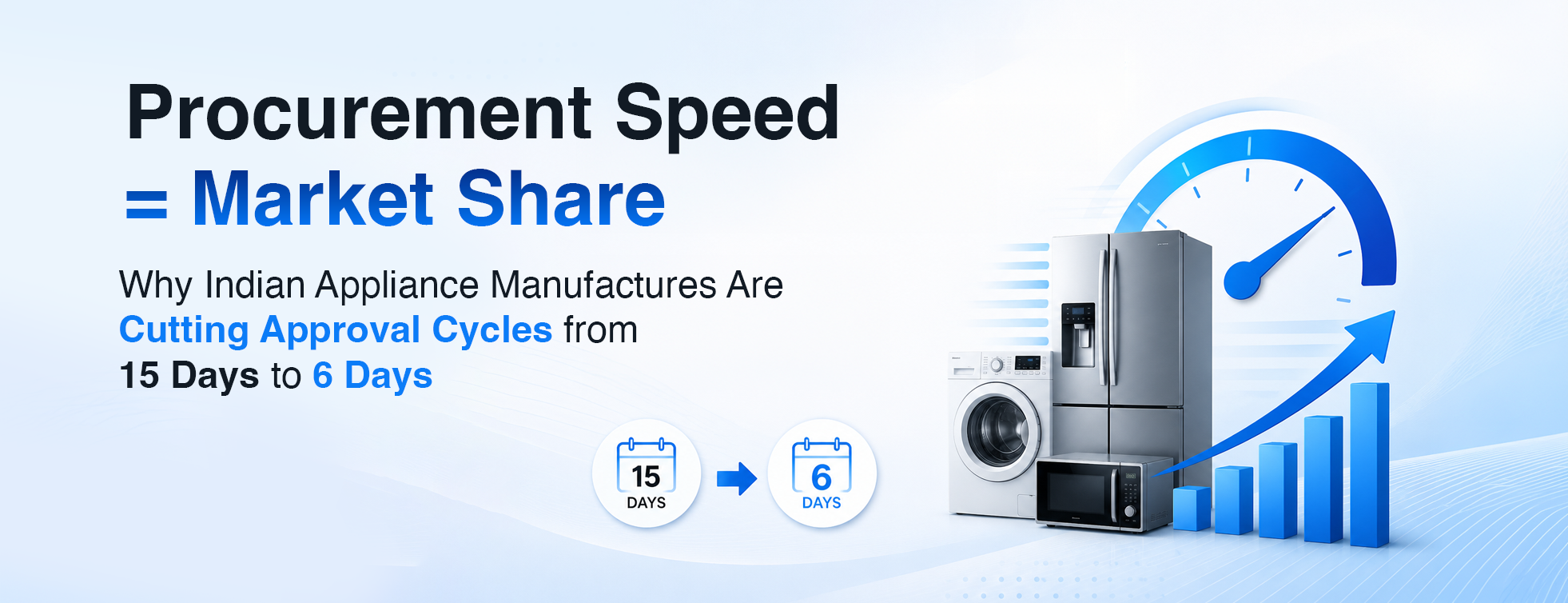
A telling example is Kutchina’s transformation challenge. The company initially operated with 15‑day approval cycles, while competitors were completing the same processes in just six days. This gap not only slowed execution but also weakened their ability to secure new business. By embracing intelligent automation, Kutchina reduced approval times to six days, proving that digital transformation can close the speed gap and unlock competitive advantage.
The cost of delay is staggering. Each day added to production or approval cycles can increase the final product cost by 5–10%, eroding margins and making Indian manufacturers less attractive to global buyers. In industries where contracts are awarded based on both price and speed, this inefficiency becomes a critical liability.
Moreover, the traditional tradeoff between quality and speed is no longer acceptable. Companies that prioritize quality but fail to deliver quickly are losing contracts to competitors who can achieve both. Digital tools such as supply chain automation, IoT‑driven operations, and smart procurement are enabling manufacturers to maintain high standards while accelerating delivery.
The lesson is clear: speed is not optional it is the new currency of competitiveness. Manufacturers who modernize now will capture contracts, reduce costs, and strengthen their global position. Those who cling to slow, traditional processes risk being left behind in the race for PLI scheme benefits and global supply chain opportunities.
Smart Procurement:
In today’s hyper‑competitive manufacturing landscape, supply chain digitization has become the cornerstone of operational excellence. Traditional procurement and vendor management systems, often reliant on manual processes, create delays, inefficiencies, and blind spots that hinder competitiveness. By embracing digital transformation, manufacturers can unlock real‑time visibility, predictive insights, and intelligent automation across their supply chains.
The Backbone of Competitive Manufacturing!
Supply chain digitization is redefining competitiveness by merging real‑time procurement visibility, AI‑driven demand forecasting, and smart vendor management into one intelligent ecosystem. Blockchain and IoT platforms provide instant transparency across suppliers, inventory, and logistics, eliminating fraud and enabling faster decisions. AI enhances forecasting accuracy, optimizing production schedules while reducing excess inventory and stockouts. Smart procurement systems evaluate vendors on performance and compliance, strengthening partnerships and minimizing risk.
The impact is proven:
Kutchina cut approval cycles by 60%—from 15 days to six—through digital procurement, achieving speed, cost efficiency, and higher customer satisfaction. Ultimately, digitization is not just about efficiency; it is about resilience and global competitiveness. Manufacturers who embrace these tools now will secure contracts and maximize PLI scheme benefits, while those who delay risk being left behind in a marketplace where speed and intelligence define success.
Manufacturing Operations Automation
Modern manufacturing operations are being transformed through automation technologies that combine intelligence, speed, and precision. IoT sensors enable real‑time factory monitoring, providing instant visibility into equipment performance, energy usage, and production flows. This data allows managers to detect anomalies early and optimize operations continuously. Equally impactful is predictive maintenance, which uses sensor data and AI models to anticipate equipment failures before they occur, reducing downtime by 30–40% and cutting repair costs significantly.
Manufacturers have started adopting digital twins. Virtual replicas of physical processes—to simulate production scenarios, test improvements, and optimize workflows without disrupting actual operations.
AI‑driven quality control ensures that defects are detected instantly, using computer vision and machine learning to maintain high standards while accelerating inspection speed. Together, these technologies create a smarter, more resilient manufacturing ecosystem where efficiency, reliability, and quality are achieved simultaneously, positioning Indian manufacturers to compete globally with speed and confidence.
Enterprise Systems Modernization
Modern manufacturers are accelerating competitiveness by modernizing enterprise systems. ERP cloud migration to platforms like SAP S/4HANA and Oracle Cloud enables real‑time data access, scalability, and streamlined workflows across global operations. At the same time, OT/IT convergence is transforming factories into smart, connected ecosystems where operational technology integrates seamlessly with information systems, driving automation and efficiency. With increased connectivity comes the need for robust cybersecurity in industrial control systems to safeguard critical infrastructure against cyber threats and ensure compliance with global standards.
Integration with supply chain partners through digital platforms enhances collaboration, transparency, and agility, enabling manufacturers to respond faster to market shifts and customer demands. Together, these modernization initiatives create a secure, intelligent, and collaborative enterprise backbone—positioning Indian manufacturers to scale rapidly, capture PLI benefits, and compete effectively in the global marketplace.
Kutchina Real Results:
Kutchina, a leading Indian appliance manufacturer with ₹500+ Crore in revenue and operations spanning eight business units, faced a critical challenge in scaling its procurement processes. Manual procurement workflows, fragmented vendor management, and slow approval cycles were creating inefficiencies that limited competitiveness. With global supply chains demanding speed and accuracy, Kutchina needed a solution that could modernize its operations and deliver measurable results.
The company implemented a digital procurement platform with real‑time tracking capabilities, enabling instant visibility across suppliers, inventory, and approvals. This transformation streamlined vendor management, eliminated manual bottlenecks, and introduced automation into core procurement functions.
The results were dramatic. Approval cycles were reduced by 60%—from 15 days to just six—allowing Kutchina to respond faster to market demands. Inventory accuracy reached 100%, ensuring that stock levels were always aligned with production needs. The company achieved ₹8 Crore+ in annual savings through reduced delays, optimized procurement, and better vendor negotiations. Most importantly, customer satisfaction improved fivefold, as faster approvals and accurate inventory translated into quicker deliveries and higher reliability.
Equally impressive was the speed of implementation. The digital procurement system was deployed in just 90 days, and the company achieved full ROI within 10 months, proving that intelligent automation can deliver rapid, tangible benefits.
Kutchina’s journey highlights how Indian manufacturers can leverage digital transformation to overcome traditional inefficiencies and gain a competitive edge. By modernizing procurement, the company not only reduced costs and improved speed but also positioned itself as a trusted partner in global supply chains. For manufacturers seeking to capture PLI scheme benefits and compete internationally, Kutchina’s success story demonstrates that the time to transform is now.
India’s PLI Manufacturing Scheme India offers unprecedented incentives to manufacturers, but these benefits are strictly time‑bound. Companies that fail to meet performance thresholds risk losing out as subsidies phase out, making speed of execution critical. The window of opportunity is narrow, and only those who act decisively will capture the rewards.
Global demand is surging, with the next 2–3 years set to be pivotal for market capture. As multinational corporations diversify supply chains under the China+1 strategy, India is positioned as a preferred hub. However, this demand will not wait—manufacturers must scale quickly to secure contracts before competitors establish dominance.
The technology gap is already reshaping the industry. Companies relying on manual processes are losing market share to rivals who have embraced automation, IoT‑driven operations, and digital procurement. Speed, accuracy, and cost efficiency are now inseparable from technological adoption, and those who lag risk irrelevance.
The decisive factor is first‑mover advantage. Manufacturers who transform now will not only capture contracts but also set industry standards, shaping benchmarks for speed, quality, and efficiency. Their leadership will secure long‑term competitiveness, while late adopters struggle to catch up in a market that rewards agility.
Embarking on digital transformation requires a structured roadmap that balances speed with impact.
The journey begins with
Phase 1: Procurement & Supply Chain, typically achievable within 30 days. By digitizing procurement workflows, manufacturers gain real‑time visibility into suppliers, inventory, and approvals. This phase eliminates manual bottlenecks, reduces fraud, and ensures faster decision‑making, laying the foundation for operational agility.
The next step,
Phase 2: Manufacturing Operations, spans around 60 days. Here, IoT sensors, predictive maintenance, and AI‑driven quality control is deployed to optimize production. Digital twins simulate processes to identify improvements without disrupting live operations, while automation reduces downtime by 30–40% and accelerates throughput. This phase ensures factories evolve into smart, connected ecosystems capable of delivering speed and precision at scale.
Finally,
Phase 3: Enterprise Integration, typically completed in 90+ days, focuses on ERP cloud migration, OT/IT convergence, and cybersecurity for industrial systems. Integration with supply chain partners enhances collaboration, transparency, and responsiveness, creating a unified digital backbone across the enterprise. This phase ensures manufacturers are not only efficient internally but also globally competitive through seamless partner alignment.
The ROI timeline is compelling: most manufacturers achieve payback within 10–14 months, with savings driven by faster approvals, reduced downtime, and improved customer satisfaction. However, the key success factor is not technology alone, but it is executive alignment and commitment.
By following this roadmap, Indian manufacturers can accelerate competitiveness, capture PLI scheme benefits, and position themselves as leaders in the global supply chain shift. The time to act is now, and those who move first will define the industry’s future.
The manufacturers winning PLI contracts are the ones who invested in digital transformation first. Speed, automation, and intelligence are no longer optional—they are the baseline for competitiveness. Kutchina’s 60% faster approvals aren’t unique; they represent the new industry standard. Every day of delay adds cost, erodes margins, and risks losing contracts to faster rivals.
Your competitors are already moving, modernizing procurement, automating operations, and integrating enterprise systems. The question is simple: what’s your plan? The window of opportunity is closing, and only first movers will capture the lion’s share of incentives and global demand.
Learn how transformation delivers measurable results in the Kutchina Case Study and assess your readiness with the manufacturing digital transformation assessment. The time to act is now.
Manufacturers winning tomorrow are digitizing today. With CodeLogicX, you can streamline procurement, automate operations, and modernize enterprise systems with delivering speed, accuracy, and resilience. Don’t let competitors set the pace. Start your digital transformation journey now and unlock measurable ROI within months.