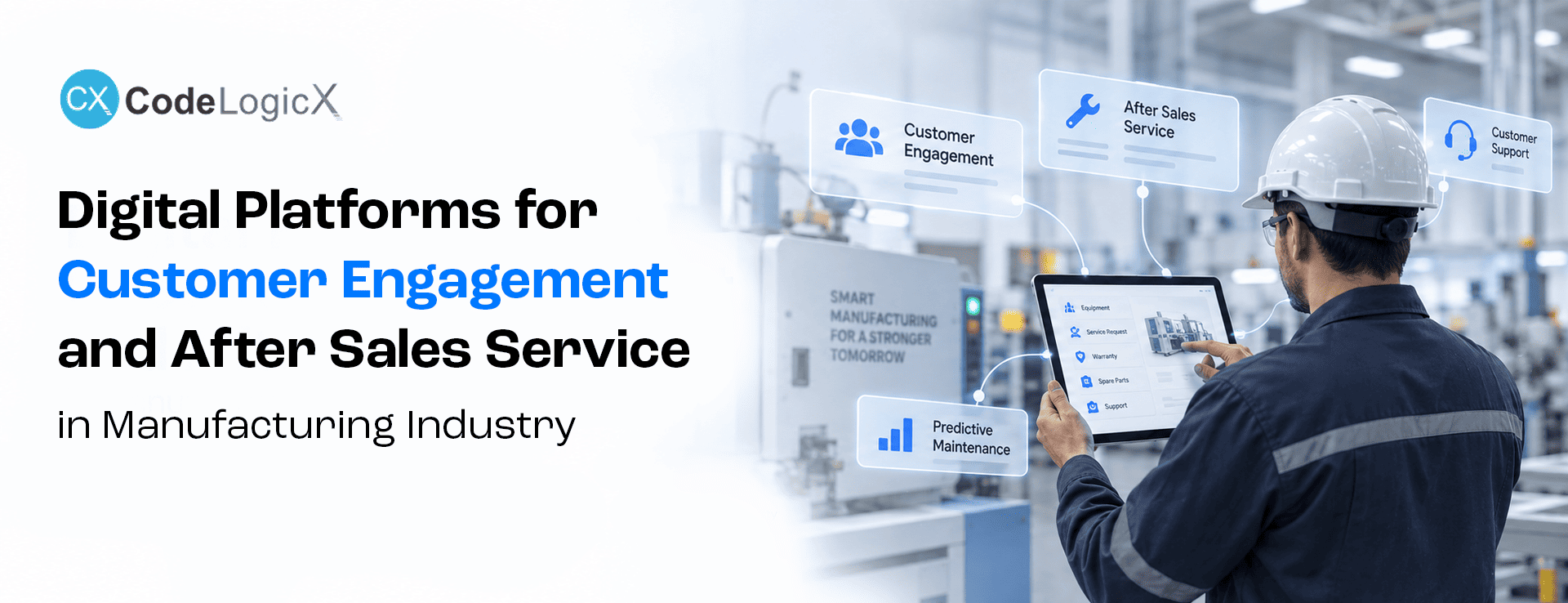
The objective of this blog is to explore how digital platforms can transform customer engagement and after-sales service by enabling hassle-free, personalized, and data-driven interactions.
Why Manufacturing Leaders are Struggling with AI and IoT in 2026?
The leaders from the manufacturing industry are struggling with AI and IoT in 2026 because organizations still face various challenges. These challenges are integrating these technologies with legacy systems, managing fragmented data, addressing cybersecurity risks, and finding skilled talent to deploy and maintain advanced solutions. While AI and IoT promise real-time visibility, predictive maintenance, and smarter decision-making, many manufacturers encounter difficulties in scaling pilot projects into enterprise-wide deployments, proving ROI, and ensuring hassle-free collaboration between operational technology (OT) and information technology (IT) teams.
As a result, the gap between technological potential and practical implementation continues to slow digital transformation across the manufacturing sector.
Let’s discuss these struggles elaborately below;
Talent Shortages and Workforce Readiness
- 39% of manufacturing leaders cite talent and skills gaps as the top barrier to scaling AI.
- 42% rank workforce upskilling as their highest organizational priority, reflecting the urgent need to train employees in AI/IoT systems.
- 89% of executives agree that managing AI agents will become a critical workplace skill within five years.
Integration with Legacy Systems
- 36% of manufacturers report on integration with legacy ERP and OT systems as a major obstacle.
- Many factories still rely on old-school infrastructure, slowing down IoT sensor deployment and AI-driven analytics.
Governance and Security Risks
- Only 7% of manufacturers have a tested AI incident response plan, the lowest across industries.
- 76% cite unreliable data as a top AI risk, despite 83% claiming to build strong AI data foundations.
- Cybersecurity is a growing concern, with 48% of executives planning significant increases in cybersecurity investment due to connected factories and IoT adoption.
Scaling AI and IoT Across Operations
- 88% of manufacturers report using AI in at least one function, but only 8–10% have fully integrated AI enterprise-wide.
- 48% are stuck at the pilot stage, compared to 34% across all industries.
- Only 39% are scaling AI across multiple functions, 10 points below the broader industry average.
ROI and Business Value Challenges
- Zero manufacturing leaders reported significant revenue uplift or cost savings from AI initiatives, compared to 12% across other industries.
- While 65% expect positive ROI within two years, only 28% are currently realizing measurable returns.
Let’s have a look at Summary Table of Pain Points (2026)
Manufacturing leaders in 2026 are investing heavily in AI and IoT but struggling to scale beyond pilots due to talent shortages, legacy integration, governance gaps, and unclear ROI. Those who build strong data foundations, governance frameworks, and workforce skills will gain a competitive edge.
While manufacturing leaders grapple with the complexities of scaling AI and IoT, ranging from legacy system integration to workforce readiness extend their challenges. The inability to fully harness digital tools often results in fragmented customer experiences, delayed responsiveness, and weakened trust.
In an era where customer expectations are rising, overcoming these operational pain points is not just about efficiency; it directly impacts how businesses engage with their customers. This makes customer engagement a critical priority, as it bridges the gap between technological transformation and human connections.
Importance of Customer Engagement
Enhances Brand Trust and Credibility
Strong customer engagement builds confidence in a brand’s reliability and integrity. When businesses consistently interact with customers through transparent communication, responsive service, and authentic storytelling, they foster trust that extends beyond individual transactions.
This credibility becomes a competitive advantage, as customers are more likely to remain loyal, recommend the brand to others, and forgive occasional missteps when they feel genuinely valued.
Provides Real‑Time Communication Channels
Modern digital platforms enable instant, two‑way communications through chatbots, social media, mobile apps, and live support. Real‑time engagement ensures that customer concerns are addressed promptly, reducing frustration and improving satisfaction.
Communication engagements help businesses share updates, promotions, and service notifications immediately, keeping customers informed and connected. This immediacy strengthens relationships by demonstrating attentiveness and responsiveness in every interaction.
Enables Personalized Offers and Recommendations
Customer engagement powered by data analytics and AI allow businesses to tailor experiences to individual preferences. Personalized product suggestions, targeted promotions, and customized loyalty rewards make customers feel understood and appreciated.
This not only increases conversion rates but also deepens emotional connections, as customers perceive the brand as attentive to their unique needs. Over time, personalization transforms routine interactions into meaningful experiences that drive repeat purchases and long-term loyalty.
Digital platforms act as a bridge between businesses and customers, offering seamless interaction across multiple touchpoints. They integrate communication, analytics, and automation to create a unified customer experience.
Key Features
-
Omnichannel Communication:
Unified messaging across email, chat, social media, and mobile apps.
AI‑driven insights to tailor services and recommendations.
-
Customer Feedback Systems:
Real‑time surveys and reviews to improve service quality.
After‑sales service is no longer limited to issue resolution; it has evolved into a strategic opportunity to strengthen customer relationships, enhance loyalty, and create new revenue streams.
Modern digital platforms are reshaping how businesses interact with customers after the point of purchase, turning service into a proactive and value-driven experience.
Let’s Dive Deep About the Advantages
Proactive Support:
Predictive analytics and AI‑driven insights allow businesses to anticipate customer needs before problems arise. For example, connected devices can alert service teams about potential malfunctions, enabling preventive maintenance, and minimizing downtime.
This proactive approach not only reduces costs but also demonstrates care and reliability while reinforcing customer trust.
Self‑Service Portals:
Empowering customers with digital self-service options such as FAQs, video tutorials, and AI‑powered chatbots creates convenience and autonomy. Customers can resolve common issues instantly without waiting for support staff, while businesses benefit from reduced service workloads.
Intuitive portals also provide personalized recommendations, ensuring that customers feel supported and valued at every step.
Warranty & Service Management:
Digital platforms streamline warranty registration, claims, and service tracking. Customers can easily access information about coverage, repair status, and replacement timelines through mobile apps or web portals.
Automated notifications keep them informed, while businesses gain efficiency by reducing manual paperwork and errors. This transparency enhances customer confidence and strengthens brand credibility.
Importance of Customer Engagement
Building Trust and Loyalty
Continuous engagement fosters stronger emotional connections with customers, creating a sense of reliability and belonging. When businesses consistently interact with their audience through personalized updates, transparent communication, and responsive services, they reinforce credibility and demonstrate commitment.
This trust translates into higher retention rates, as customers are more likely to remain loyal to brands that make them feel valued and understood. Over time, engaged customers often become advocates, promoting the brand within their networks and strengthening its reputation.
Real‑Time Communication
Digital platforms enable instant interaction through live chat, social media, mobile apps, and AI‑powered support systems. Real‑time communication reduces response times, ensuring that customer concerns are addressed promptly and effectively.
This immediacy enhances satisfaction by showing attentiveness and care, while also allowing businesses to share updates, promotions, and service notifications instantly. By being available when customers need them most, organizations build stronger relationships and demonstrate a commitment to customer centric service.
Personalized Experiences
AI‑driven insights and advanced analytics empower businesses to tailor offers, recommendations, and support to individual needs. Personalized experiences go beyond generic marketing; they create meaningful interactions that resonate with each customer’s preferences, purchase history, and behavior.
Whether it’s suggesting relevant products, offering customized loyalty rewards, or providing proactive service, personalization makes customers feel recognized and appreciated. This not only boosts conversion rates but also deepens emotional connections, turning routine transactions into memorable experiences that drive long‑term loyalty.
Digital platforms unify customer interactions across multiple channels, ensuring consistency and accessibility. They integrate CRM, analytics, and automation tools to deliver a holistic experience.
Key Features
Omnichannel Communication
Hassle-free integration across multiple platforms of email, chat, social media, and mobile apps ensures customers can engage with businesses on their preferred channel without disruption. Omnichannel systems unify these interactions into a single view, allowing service teams to maintain context and continuity across touchpoints.
This reduces customer frustration from repeating information and enables businesses to deliver consistent, personalized experiences. By meeting customers where they are, organizations strengthen accessibility and responsiveness, ultimately driving higher satisfaction and loyalty.
Personalization Engines
Machine learning algorithms analyze customer behavior, purchase history, and interaction patterns to deliver tailored recommendations and proactive support. These personalization engines go beyond simple product suggestions; they can predict future needs, identify potential issues, and offer solutions before customers even ask.
For example, a platform might recommend maintenance services based on usage data or suggest complementary products aligned with past purchases. This level of personalization enhances relevance, increases conversion rates, and fosters deeper emotional connections with customers.
Feedback Systems
Real‑time surveys, ratings, and review mechanisms provide businesses with actionable insights into customer satisfaction and service quality. By capturing feedback immediately after interactions, organizations can identify pain points, measure performance, and implement improvements quickly.
Advanced analytics can categorize and prioritize feedback, helping businesses focus on the most critical issues. Moreover, transparent responses to customer reviews demonstrate accountability and care, and reinforcing trust. Feedback systems thus serve as both a diagnostic tool and a relationship building mechanism.
Challenges and Solutions:
Data Security
Protecting customer data is one of the most pressing challenges in the digital era. With rising concerns about privacy breaches and cyberattacks, businesses must ensure compliance with global standards such as GDPR, ISO/IEC 27001, and other regional regulations.
Beyond compliance, organizations should adopt advanced encryption, multifactor authentication, and continuous monitoring to safeguard sensitive information. Building customer trust requires not only robust technical safeguards but also transparent communication about how data is collected, stored, and used.
Integration Complexity
Many organizations struggle to integrate modern digital platforms with legacy systems. Outdated infrastructure often creates silos that hinder seamless customer engagement. To overcome this, businesses can leverage APIs, middleware, and cloud‑based integration solutions that bridge gaps between old and new technologies.
A phased approach starting with critical customer touchpoints—can minimize disruption while ensuring smooth connectivity. Successful integration enables a unified view of customer data, empowering teams to deliver consistent and personalized experiences across channels.
User Adoption
Even the most advanced platforms can fail if employees and customers resist change. User adoption is often hindered by unfamiliarity, lack of training, or poorly designed interfaces. To address this, organizations should invest in comprehensive training programs, change management initiatives, and intuitive user experiences.
Gamification, role-based dashboards, and mobile-friendly interfaces can encourage engagement, while ongoing support ensures that both employees and customers feel confident using new tools. Ultimately, adoption is driven by demonstrating clear value—whether through faster service, easier access, or improved outcomes.
Elevate Your Customer Engagement
Digital platforms are no longer optional—they are essential for businesses that want to thrive in a customer-centric economy. Addressing challenges in data security, integration, and user adoption requires a proactive strategy that combines technology, process, and people. Organizations that act now will not only reduce risks and costs but also unlock new opportunities for growth, loyalty, and innovation.
The time to transform is now. Invest in secure, integrated, and user‑friendly digital platforms to elevate your customer engagement and after‑sales service—and position your business for long‑term success.
Outlook of Manufacturing Industry:
Digital platforms will continue to evolve with AI, AR/VR, and blockchain technologies, offering immersive engagement and transparent service ecosystems.
The manufacturing industry is poised for a profound transformation driven by digitalization, sustainability, and advanced technologies. Smart factories powered by the Industrial Internet of Things (IIoT), artificial intelligence, and robotics will enable real‑time monitoring, predictive maintenance, and highly flexible production systems. Sustainability will become a central priority, with manufacturers adopting green energy, circular economy practices, and eco‑friendly materials to meet regulatory demands and consumer expectations.
Global supply chains are expected to become more resilient and localized, supported by blockchain for transparency and additive manufacturing for on‑demand production. Human‑machine collaboration will redefine workforce roles, requiring continuous upskilling and integration of digital tools.
Ultimately, the future of manufacturing will be characterized by agility, innovation, and customer‑centricity, positioning the industry as a key driver of economic growth in an increasingly connected world.
Conclusion
Digital platforms for customer engagement and after‑sales service empower businesses to deliver value far beyond the initial purchase. In a world where customer expectations are shaped by immediacy, personalization, and transparency, these platforms provide the foundation for building enduring relationships that drive loyalty and advocacy. By leveraging technologies such as AI‑driven analytics, omnichannel communication, and self-service portals, companies can transform after sales interactions from reactive problem‑solving into proactive value creation.
The benefits extend across multiple dimensions. Operationally, digital platforms streamline workflows, reduce service costs, and enable faster resolution of customer issues. Strategically, they open new opportunities for upselling, cross‑selling, and personalized engagement that strengthen revenue streams. From a customer perspective, they foster trust by ensuring consistent, responsive, and tailored experiences that meet evolving needs. This convergence of efficiency and empathy positions businesses to thrive in customer centric economy.
Moreover, digital platforms are not static solutions—they evolve with customer behavior and technological innovation. Organizations that embrace them gain the agility to adapt quickly, anticipate future demands, and differentiate themselves in competitive markets. The integration of feedback loops, predictive insights, and continuous improvement mechanisms ensures that customer engagement and after‑sales service remain dynamic, relevant, and impactful.
Ultimately, the adoption of digital platforms signals a shift in mindset: after‑sales service is no longer a cost burden but a strategic lever for growth. Companies that invest in these capabilities will not only reduce friction and enhance satisfaction but also cultivate long‑term partnerships with their customers.
To know more about our manufacturing industry solutions which are tailor-made and can be aligned to match your business needs, talk to our experts and stay ahead of your competitors.